
 |
These youngsters testify to how South African have been reckless in the past.
It is a known fact that the country's leadership allowed politics to overshadow science and refused to accept the potent reality of HIV/AIDS. It delayed the rollout of preventative treatment and exposed tens of thousands of newborns to disease.
Most of the young mothers popping their pills were infected in the womb.
When the rest of the world was rolling out a drugs like the one called Nevirapine to reduce the chances of mothers transmitting the virus to their offspring, within the South Africa, lthe citizens were famously advised to use lemon and garlic instead, to protect themselves.
Statistics of AIDS in South Africa:
According to a report by UNAIDS, in 2014 AIDS remains the biggest cause of death among young people in Africa:
340,000 new infections in 2014 (931 a day)
2,700 young people infected every week - 74% girls
More than half a million infected in the past year
140,000 recorded Aids deaths every year
Many AIDS deaths go unreported, so it is estimated there are more than 400 AIDS deaths each day
But times have really changed.
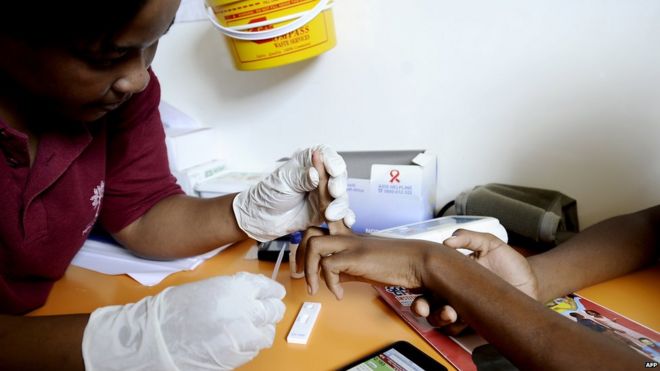
But the country faces a new threat - the staggering number of young people here under the age of 24 becoming newly infected with HIV.
The government has been warning South Africans against sugar daddies.South Africa's Health Minister Aaron Motsoaledi recently embraced the term when he unveiled a new programme seeing to tackle the alarming number of adolescent infections.
In any one week, 2,700 young men and women aged 15-24 become infected with HIV, according to figures released by UNAIDS.
Young South African women are particularly at risk and are getting infected in higher numbers due to a complex range of factors including economic and gender inequality, family breakdown and the practice of younger women having sex with older men.
This is the so-called "sugar daddy" syndrome or what the experts call "inter-generational sex".
It explains why in some places, young women are three times more likely to be infected with HIV than young men.
A new word which captures this arrangement is a "blesser" - used to describe an older man who will offers gifts to a younger woman for sex.
One of the challenges that young people face is stigma.
South Africa is running one of the world's largest HIV programmes in the world, yet an estimated 400 people die in South Africa every single day of HIV-related illnesses, either because they don't seek help early on or they default on their treatment. That message - that you can still die from the AIDS virus - is somehow getting lost, it seems.
South Africa is not alone. More than two million adolescents around the world are living with HIV, according to UNICEF.
Most of them are in sub-Saharan Africa and Asia.
It still remains the biggest cause of death among young people in Africa and the number of lives lost in this group has tripled in the past 16 years.
Additional Source: BBC

No comments:
Post a Comment